Jakarta Cracks Down on 23 Buildings for Functionality Certificate Lapses
Reported by Aldi Geri Lumban Tobing | Translated by Nugroho Adibrata
The Jakarta government remains steadfast in its commitment to ensuring structural regulatory order through a robust framework of guidance, oversight, and consistent enforcement of building codes.
Technical conclusions must be based on transparent inspections and verifiable data
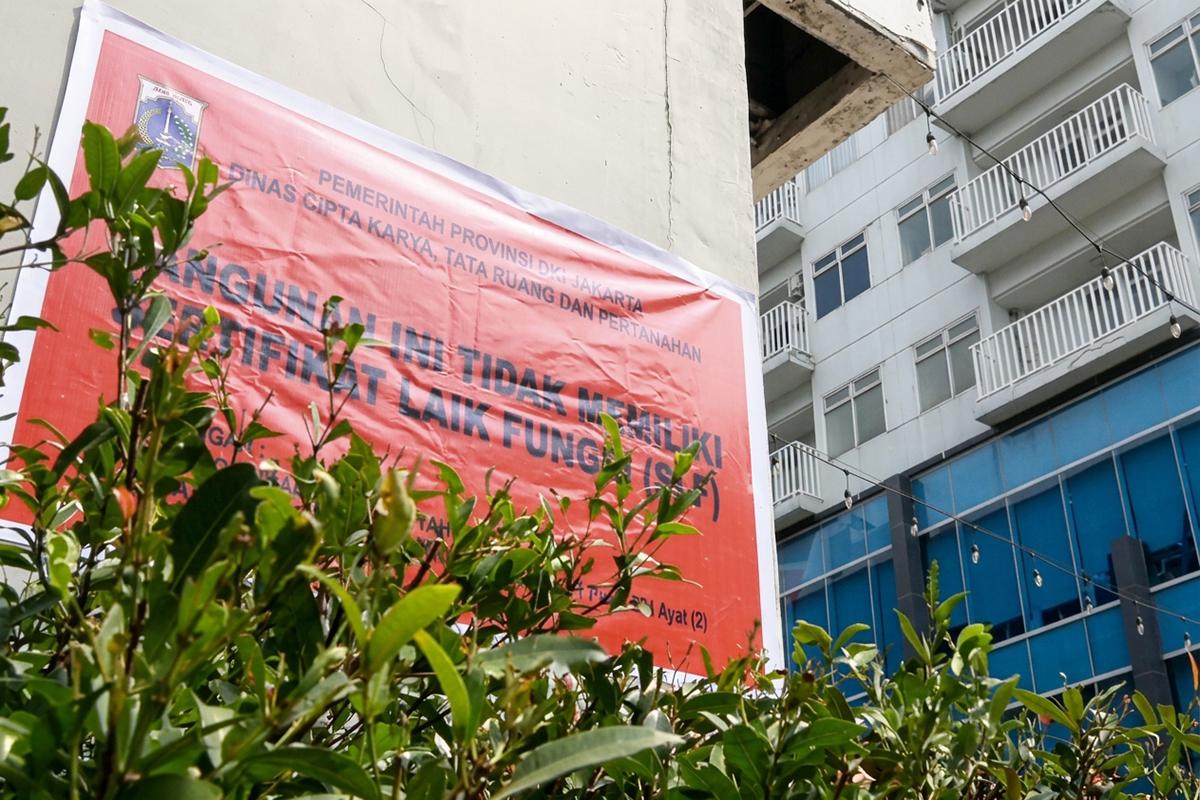
The Jakarta Human Settlements, Spatial Planning, and Land Management Agency (CKTRP) recorded that 23 buildings have been served with official notices regarding their Certificate of Functionality (SLF) obligations throughout 2026.
According to 2026 enforcement data, clarification meetings were convened for 57 buildings. Further, legal measures have culminated in the issuance of permanent and/or temporary cease-and-desist orders for eight structures found to be in non-compliance.
South Jakarta CKTRP Sub-agency has Checked 650 Buildings SuitabilityJakarta CKTRP Agency Head, Vera Revina Sari, said the current enforcement drive is a pivotal component of Jakarta’s strategy to ensure systematic building governance.
She went on to say that the actions taken against buildings lacking a Certificate of Functionality (SLF) are designed to foster a culture of compliance and responsibility, rather than being strictly punitive in nature
"Thus far, our oversight has led to 57 clarification sessions and the issuance of 23 formal notices regarding SLF requirements. We're prioritizing the fulfillment of building obligations to ensure that the city’s infrastructure meets the highest standards of safety and order," she expressed, Tuesday (9/1).
The SLF is a critical testament to a building’s functional integrity, verifying that it has passed the formal evaluation procedures required by regulation.
According to Sari, this certification guarantees that a structure meets all technical requirements for its specific purpose, making its utilization fully accountable.
Beyond mere compliance, the SLF framework acts as a catalyst for proactive stewardship, prompting owners to commit to regular upkeep and routine technical audits as long as the building is in use.
She pointed out that lacking an SLF does not equate to an immediate safety risk. It simply means that the formal process of certifying functional fitness is still pending.
"Technical conclusions must be based on transparent inspections and verifiable data. While we do not infer a building’s safety based solely on its administrative status, the government still requires the SLF process to be concluded before the building can be used, ensuring that safety is confirmed rather than assumed," she clarified.
She added that the agency is committed to a regimen of continuous oversight, ensuring building governance is handled with consistency. At the same time, administrative actions will be taken against any party failing to meet their legal duties.
Vera underscored the importance of adhering to the standards set by PP No. 16/2021, calling on all building managers to be diligent in their certification.
"Owners shouldn't wait for sanctions to take action. Whether it is a new application or a renewal, fulfilling SLF obligations must be a priority move. A proactive stance is far superior to facing the consequences of administrative enforcement," she continued
To provide background, the SLF is an official declaration of a building’s fitness for occupancy, issued by the Regional Government. Mandated by Law No. 28/2002 and its implementing regulation (PP 16/2021), the SLF is a non-negotiable legal requirement.
Article 274 (2) reinforces this obligation, stipulating that property owners must be in possession of an SLF before their buildings are deemed eligible for utilization.
Accordingly, an SLF remains a compulsory prerequisite for the utilization of any building, in accordance with applicable provisions. The CKTRP Agency implements a systematic, tiered approach to enforcement against non-compliant properties.
The process begins with an invitation to a clarification session, escalating through the issuance of first, second, and third warning letters. At every stage of this warning process, property owners are allotted a seven-day window to take corrective action and meet their legal duties.
Following the final warning, a 14-day window serves as the last opportunity for compliance before the issuance of formal operational halts. These orders—classified as either Temporary (SPPKS) or Permanent (SPPKT)—are deployed based on the nuanced development of each case.
The SPPKT is a stringent measure for buildings utilized without a baseline SLF. In contrast, the SPPKS serves as a corrective action for buildings that have allowed their functional certification to expire, necessitating a prompt administrative update before full operations can resume.